Share Dr. Richard Sampson's obituary with others.
Invite friends and family to read the obituary and add memories.
Stay updated
We'll notify you when service details or new memories are added.
You're now following this obituary
We'll email you when there are updates.
Select your format and elements to print
IN LOVING MEMORY OF Dr. Richard Sampson
Richard
Sampson
Feb 28, 1937 — Feb 6, 2025
Dr. Richard Sampson's Obituary
Born with his twin brother Patrick in Los Angeles in 1937 to Fredrick and Margaret Sampson (Vaughn). Richard was raised in California and attended Loyola High School. He left for college receiving a BA in English from Notre Dame and a medical degree from Harvard University. He worked as a pathologist at Newton Wellesley hospital for 40 years. He married Irene Bogdanovs with whom he had 5 children and later in life married Valda Zalkalns.
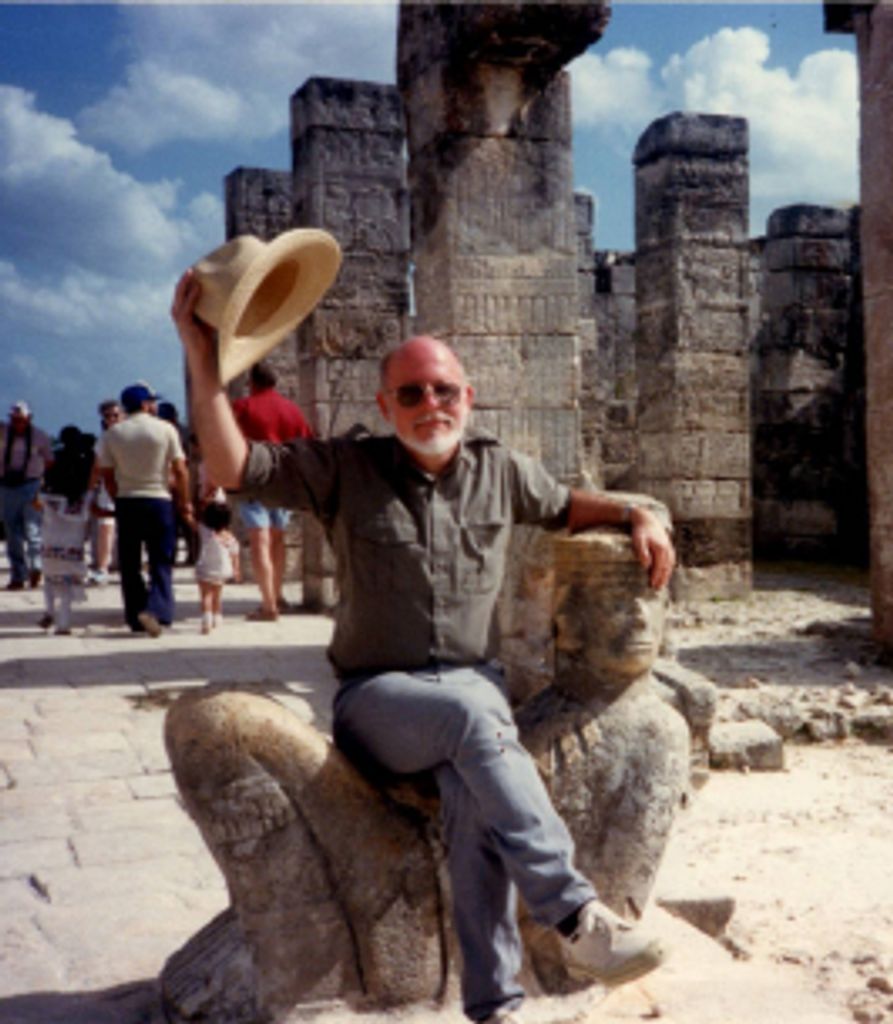
Richard loved to travel. He lived in Japan for 3 years researching the impacts of the atomic bomb on the local population. He also spent several months in Peru volunteering as a doctor in a remote village. He walked many different routes of the Camino de Santiago (Spain, Portugal and France) and the Wainwright Coast to Coast walk in England.
Richard was a lifelong learner returning to college (both Boston University and Brandeis University) after his retirement. He studied history, poetry, Spanish, and political events, typically taking 3 college courses per semester until the end of his life.
Richard was preceded in death by his 2 wives Irene Sampson and Valda Zalkalns as well as his child Richard Sampson and his twin brother Patrick Sampson.
Richard leaves behind 4 children and their significant others as well as his 2 grandchildren.
A celebration of life for friends and family will take place at the Latvian Lutheran Church 58 Irving St Brookline, MA 02445 on September 6th 2025 from 2-4pm. Please dress comfortably for this remembrance.
Autobiography of Richard Sampson
I was born in Los Angeles and my mother was born in Los Angeles- something like being from the Mayflower stock here in Massachusetts. My mother's family were German farmers in downstate Illinois and my father's family were Irishmen from Lawrence, Massachusetts who came with his family at a very early age. My paternal grandfather was an auto mechanic, but his wife, a "lace curtain" Irishwoman did not want her son to have a "dirty hands" trade and he was spared from learning any practical skills. My mother's family was a bit more colorful. Her father (my maternal grandfather) was a dentist who left my grandmother shortly before my mother was born. He was never spoken about in the family and we assumed he was dead. She and her mother lived in rectories where her mother was a housekeeper for the resident priest. We did learn a family legend about him. His name was Dr Von Bonhorst, and that there is an ancestor, General Von Bonhorst, who has a statue in Berlin.At some point my mother took the name "Vaughn" perhaps to avoid the anti german feelings of the time. My parents married in Santa Barbara and after an appropriate interval, I and my twin brother Patrick were born. We were a middle income family in a modest area of Los Angeles. My father was a high school teacher in the Los Angeles school system and my mother only worked occasionally as a secretary-receptionist for the Red Cross or other charities. My brother and I attended the local Catholic elementary school and later Loyola High School.
After graduation it was assumed my brother and I would go to UCLA but my father learned of a new scholarship program funded by General Motors and to my surprise I won a scholarship good for any university in the country- full costs with an extra sum given to the university to defray the expenses. The only problem for this was it was given in May when most schools had decided their admissions and with our family an out of state school would have been impossible. And the Ivy League schools did not have the appeal in California that they have on the East Coast. So, I picked Notre Dame about which I knew little except about the football team. At that time travel across the country was by train and air travel was exotic and expensive. So, I spent many long hours on the Santa Fe or Union Pacific from Los Angeles to Chicago and returned. My brother wisely went to UCLA. When I started at Notre Dame I was a chemistry major but decided that I didn't relish the thought of a future as a chemist and after some tests showing that I preferred the humanities I switched my concentration to English. That first year I read all of the novels by Aldous Huxley. When word got around about my reading project my friend who was a minor movie star sent me an invitation to visit Huxley at his house in the "Hollywood Hills". I was mostly silent during the lunch being tongue tied in front of the master. After a year of English I had nostalgia for the sciences and took more courses in Physics and Chemistry but kept my concentration in English. This program made me a candidate for medical school but for little else. And so I applied to UCSF, UCLA and as a long shot to Harvard which had not accepted a student from Notre Dame in at least 4 years. I had 2 interviews, one in Los Angeles with a successful internist and later in Chicago with a faculty member from Harvard. To my surprise I was accepted at Harvard University Medical School.
I really did not like Harvard Medical School very much. I was no longer an academic superstar, but only an average or less than average student and moreover one of the humanities concentrators who struggled with the sciences in the first and second year. Biochemistry was a great difficulty especially since I was in competition with students from TC who all studied biochemistry in college and would ask the professor about the latest study in the "JBC". I also flunked my first class since grammar school handwriting- the course in genetics that was taught occasionally alongside the major classes in anatomy and biochemistry. It taught me a good lesson in modesty. Also, my girlfriend from Notre Dame/St Mary's. Irene Bogdanovs, left her college to live in Boston and work at one of the insurance companies. She knew nobody in Boston which put a huge responsibility on me. One night at the end of the second year after the Harvard exams but before National Boards I was returning home from her house in the Back Bay to Vanderbilt I was biking west on Beacon Street to Mass. Avenue when a car ran a red light from Cambridge, hit an Aston Martin sports car, and then
hit me on my bicycle. It broke my right femur and tibia-fibula, but very fortunately no head damage. When the cops learned I was a Harvard student the ambulance brought me to the old Peter Bent Brigham Hospital, where I was admitted to Dr. Franny Moore's service. My orthopedist was a well-known trauma surgeon. I was put into traction and every time I was scheduled to have a rod put into my femur, I kept getting a fever so my very cautious doctors would cancel my surgery until the bone healing was advanced and the rod replacement inadvisable. I spent the summer looking at my foot. My classmates were very kind to me, giving blood and books and encouragement. Irene visited me often. The next year I married her in a Latvian ceremony in Des Moines, Iowa. When I was finally discharged in November my right lower extremity was so wasted it was smaller than my arm. During my hospital stay I was part of Dr. Moore's metabolic study and everything I ate or excreted was analyzed. Also, I took the National Board Exam in bed. An amusing event happened as I was healing. My bed would be wheeled down to the auditorium when a professor was giving a lecture for my class. Often the professor would wonder why I was there since he was not going to present an orthopedic patient. As I went along during these clinical years eliminated one by one the specialties I was learning. Finally I confronted Pathology and to test my tolerance for that specialty I took an elective at Beth Israel Hospital, which I found out later was a refuge for confused medical students. I learned that I could attend an autopsy without psychological upheaval which confirmed me in my future career. I graduated from Harvard and applied for residency at UCLA and quickly brought Irene and myself back to California, skipping the Harvard graduation ceremony. The hospital at UCLA was quite new and small at that time patients were screened for whether they were "interesting" before they could be admitted. The pathology department emphasizes laboratory research (rat and mouse) over "service" pathology on patients. This was not to my liking and I began to plan to leave the program . However, UCLA had a connection with the USPHS for a program with the Atomic Bomb Casualty Commission (ABCC) in Hiroshima which I joined as a draft deferral CORE program.
When I left UCLA for a residency at the Hospital of the University of Pennsylvania, I found out that the chief at UCLA was trying to get my assignment to Japan cancelled since I rejected the UCLA program. However, I was saved by the bureaucracy of the USPHS since I was assigned to the Bureau of Radiological Health and they had no other position to offer me. So, I was assigned to Japan. The Pathology department at ABCC was small (only 1 other American doctor and several Japanese.). We were responsible for doing autopsies on members of the study populations. ABCC was unpopular in the Japanese population and regarded as an American institution and autopsies were considered suspicious. ABCC would pay relatives for the permission and arrange for the procedure to be done after the viewing ceremony "on the way to the crematorium". So our autopsies were generally done around midnight. Often the caskets would arrive with the body covered in flowers with bats flying around the morgue. I did many autopsies in my 3 years there but most of my work was on the Thyroid Cancer Project. I managed to have the assistants find thyroids from some 3,000 autopsies which I examined with many slices, taking more microscopic slides when necessary. This resulted in finding a huge number of small papillary carcinomas (more than 500). I am sure I have seen more of these tumors than anyone in the world. The clinical point of this is that they are harmless and should not justify surgery or other treatment. I was convinced that these findings were academic and of limited clinical significance until I saw an article in the NEJM of a clinical study from the University of Chicago which studied patients who had childhood radiation for a variety of benign conditions. They had non-diagnostic changes on thyroid scan and were given total thyroidectomy. Pathologic study on these glands showed some minute papillary carcinomas similar to the Japanese study, which in their mind justified the procedures. I wrote a letter to NEJM asserting that these tumors were harmless and could not justify the morbidity of risks of removing the thyroid. This caused a bit of turmoil and the thyroidologists at the University of Chicago called a meeting to discuss the treatment of radiation associated thyroid carcinoma. I presented my findings at that meeting and found support from pathologists, clinicians and surgeons but did not change the behavior of the Chicago surgeons. I learned a lesson about medical politics The rest of my career was spent in "service" pathology for 40 years at the Newton Wellesley Hospital. I can sum it up by saying that at the end of my career I spent some time with a former NWH colleague at his home in the Argentine Andes. He regaled me with stories of how he had saved patient after patient with his skilled diagnoses. Unfortunately, I could only remember the mistakes I made so I could say nothing. The way of pathology!
My personal life was more interesting. Before our divorce in 1978 Irene and I had 5 children, one of whom died in infancy. The other 4 have survived to have productive lives and are rather far flung. They live in Berwick, Maine; Paris, France and Austin, Texas. About 2 years after my divorce I met Valda Zalkalns who became the emotional focus of my life until now. We walked the Camino de Santiago in 2001 and 2003 and part of the Camino in France ending where we started in Spain. We also walked the Wainwright Coast to Coast walk in Northern England. We married in 1994 and she was my second Latvian wife (!). She was a very talented artist in various media: watercolor, ceramics, tiles and later land art and print making. She died in 2017 of a vicious soft tissue sarcoma originating in her mid-back. After she died, I curated a show of her art at her studio in the Fort Pierce Channel area of Boston and wrote a book about her life and art. Since then I have been slowly adjusting to life without her.
Funeral Services for Dr. Richard Sampson
Service

Saturday
Latvian Lutheran Church
Starts at 2:00 pm
A celebration of life for friends and family will take place at the Latvian Lutheran Church 58 Irving St Brookline, MA 02445 on September 6th 2025 from 2-4pm. Please dress comfortably for this remembrance.
Dr. Richard Sampson's Guestbook
Visits: 5
This site is protected by reCAPTCHA and the
Google Privacy Policy and Terms of Service apply.
Service map data © OpenStreetMap contributors